

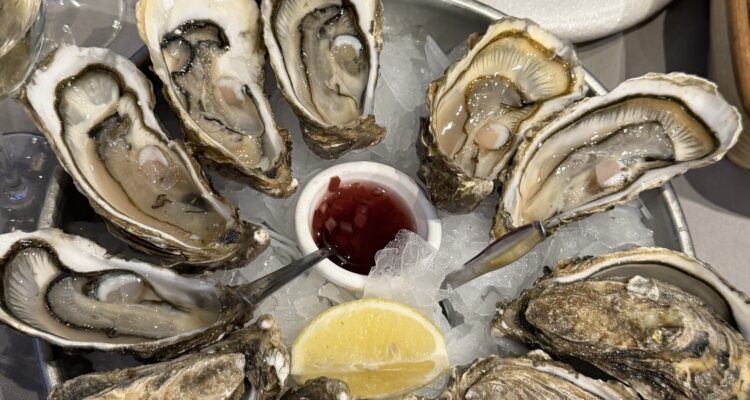
If there is one thing I realised during my trip to Brittany, it is that food is one of the best ways to discover the territory.
The sea is not only something you admire from the promenade in Saint-Malo or from Pointe du Grouin: it arrives directly on the plate in the form of oysters, mussels, fish, shellfish and seafood. Then there is buckwheat in the galettes, salted butter, cider, crêpes and those desserts that make saying no to a second one particularly difficult.
During our three-day itinerary between Saint-Malo, Cancale, Mont-Saint-Michel, Dol-de-Bretagne and Dinard, we tried very different restaurants, all sharing one common element: a cuisine deeply connected to the products of the coast and of Brittany.
This is my guide to what to eat in Brittany and where to eat between Saint-Malo, Cancale, Dol-de-Bretagne and Dinard, starting, naturally, with the places I personally tried.
Saint-Malo: galettes, oysters and cider
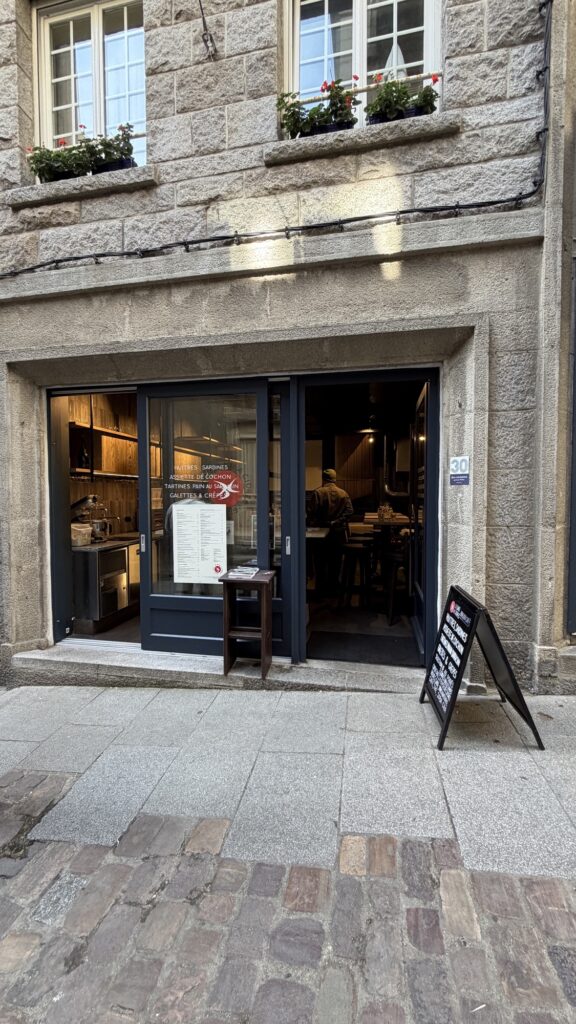
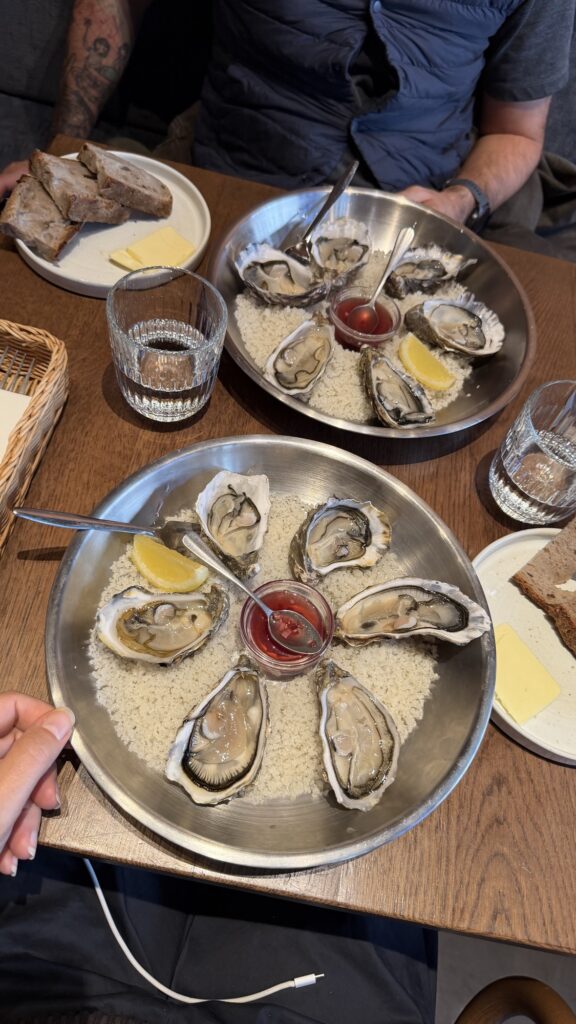
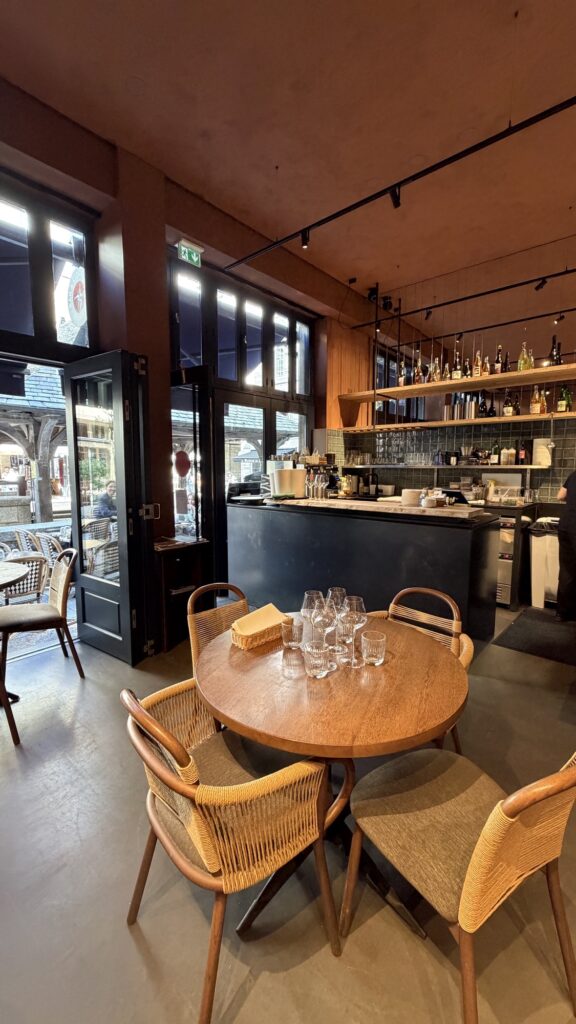
The first gastronomic stop of our trip was Saint-Malo, where we had lunch at Bar à Cidres / Breizh Café.
It is an interesting place to begin discovering Breton cuisine because it brings together some of the region’s most representative ingredients: buckwheat, seafood and cider. Bar à Cidres Breizh Café, which opened in 2026 in the centre of Saint-Malo, offers a selection of artisanal ciders and perry alongside Cancale oysters, mussels, smoked fish, buckwheat galettes and crêpes.
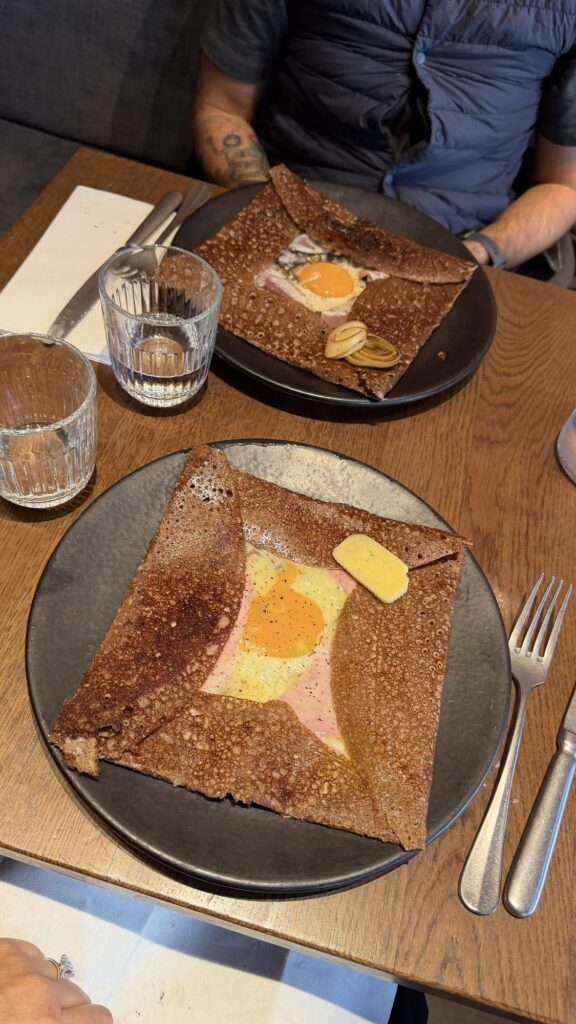
During our lunch, we chose Celine fine oysters No. 3, a galette with artisan Breton ham and a Kagurazaka galette.
This is also a good starting point for understanding one of the great characteristics of Breton cuisine: a galette is not simply a savoury crêpe. It is made with buckwheat, or sarrasin, and is one of the most recognisable dishes of the region.
And the best way to enjoy it? With a bowl of Breton cider.
.
Cancale: where oysters become an experience
Then there is Cancale.
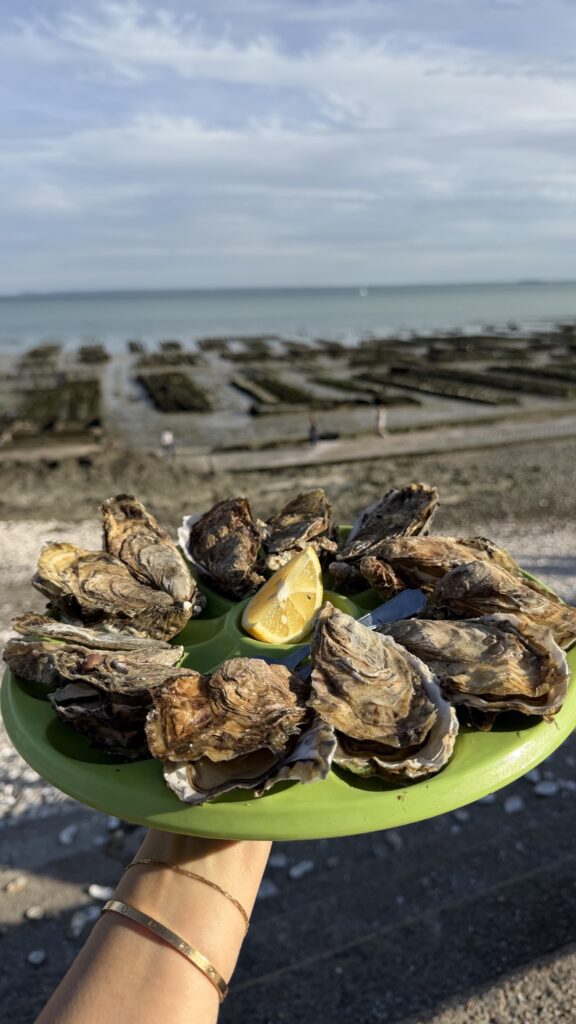
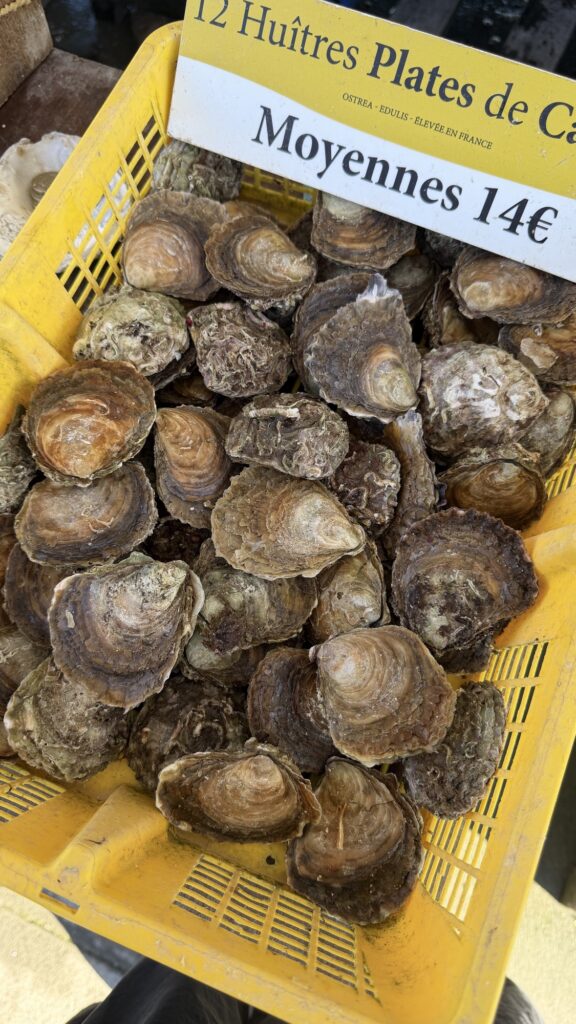
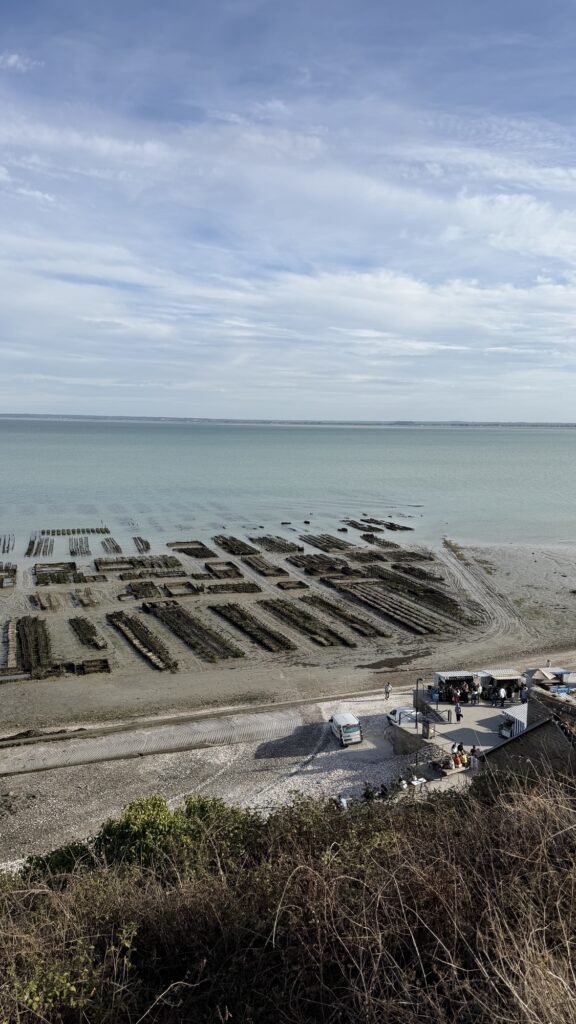
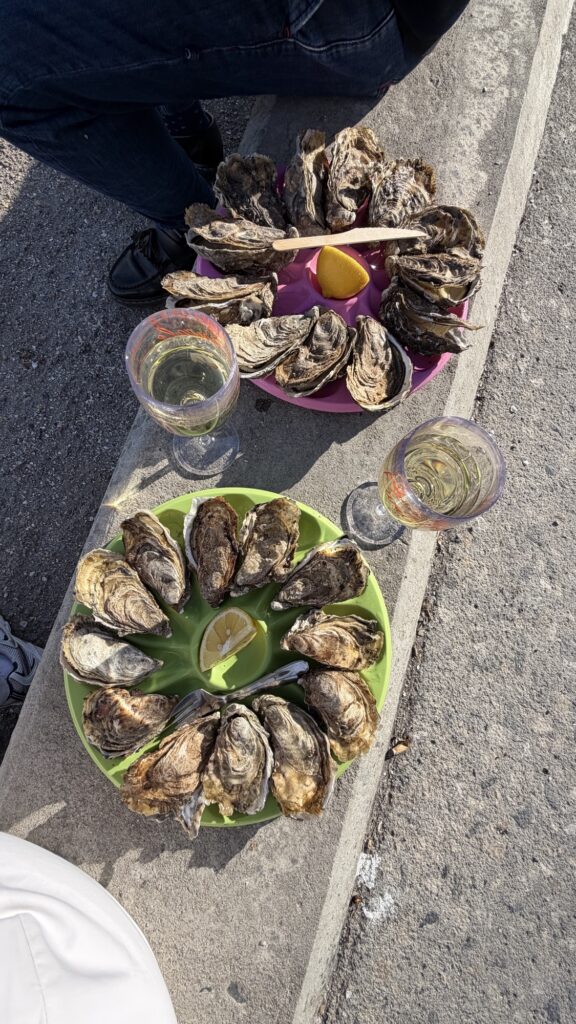
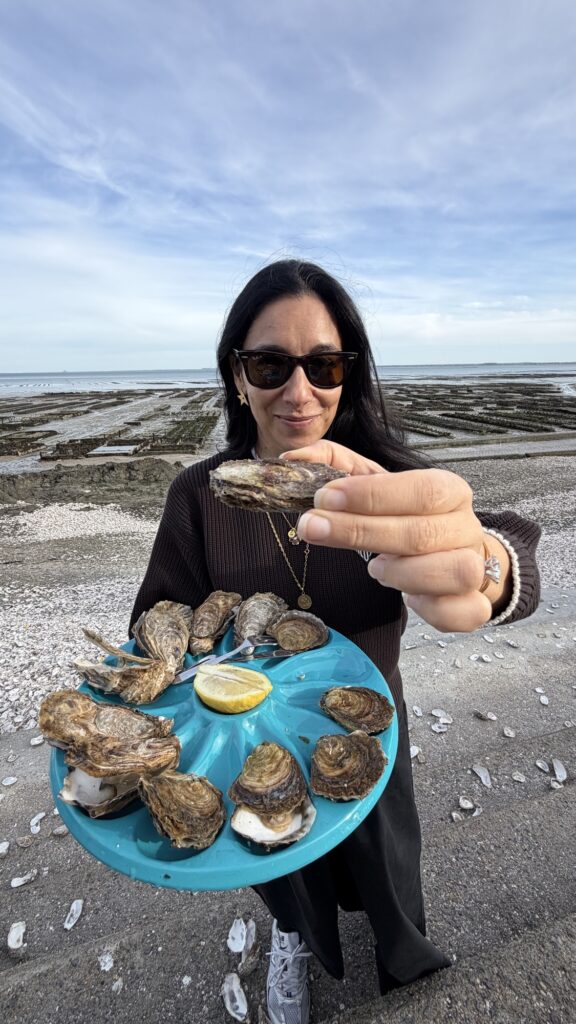
Here, simply talking about “eating oysters” would be an understatement. The harbour of La Houle and the oyster market are part of the same experience: you arrive by the sea, buy oysters directly from the producers and eat them on the spot, looking out over the bay.
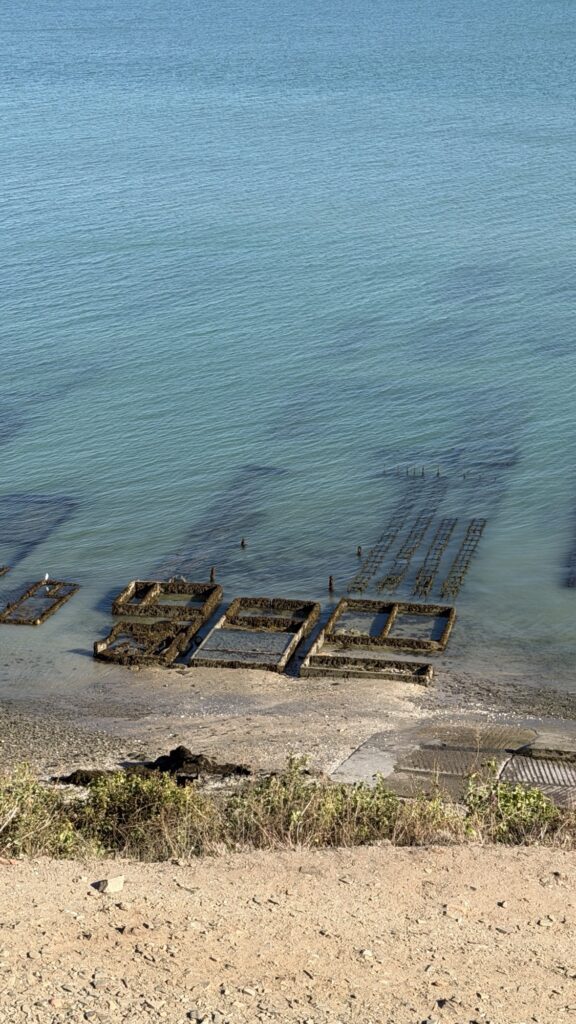
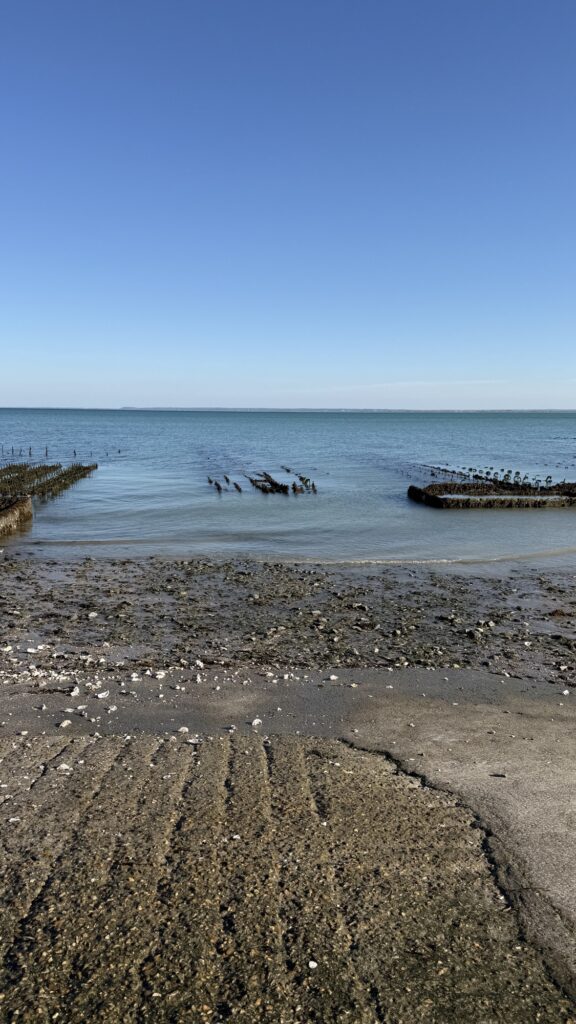
This is exactly what we did during our trip. At low tide, the landscape changes completely and the oyster beds become visible across a large part of the bay. It is precisely this relationship between the sea, oyster farming and gastronomy that makes Cancale so special.
It was one of the experiences we specifically wanted to have during the trip and, personally, one of the ones I would recommend not missing.
There is no need to turn it into a long lunch: order your oysters, take them down to the harbour and eat them there.
It is difficult to imagine a more direct way of tasting Cancale.
La Mère Champlain: dinner overlooking the bay
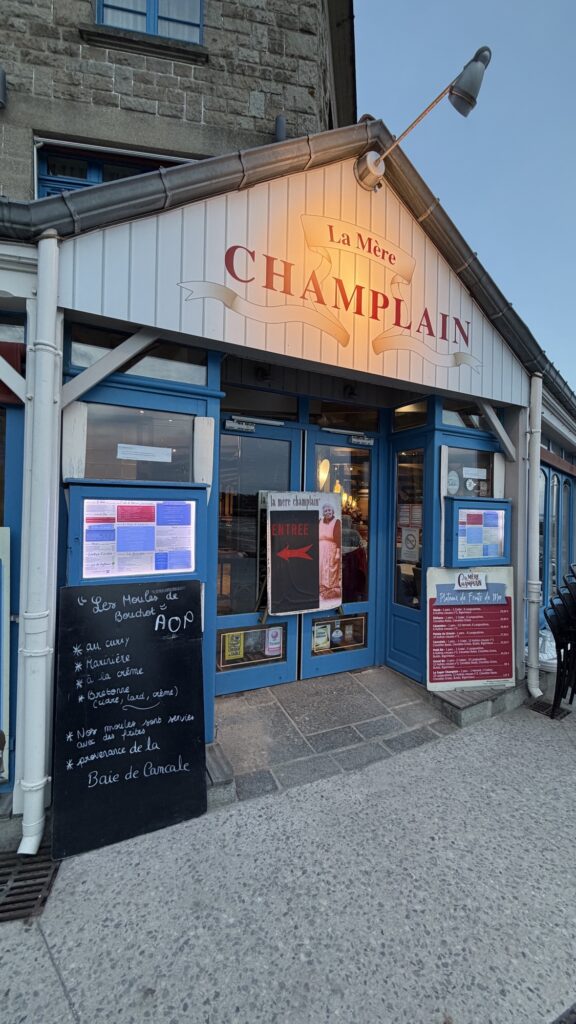
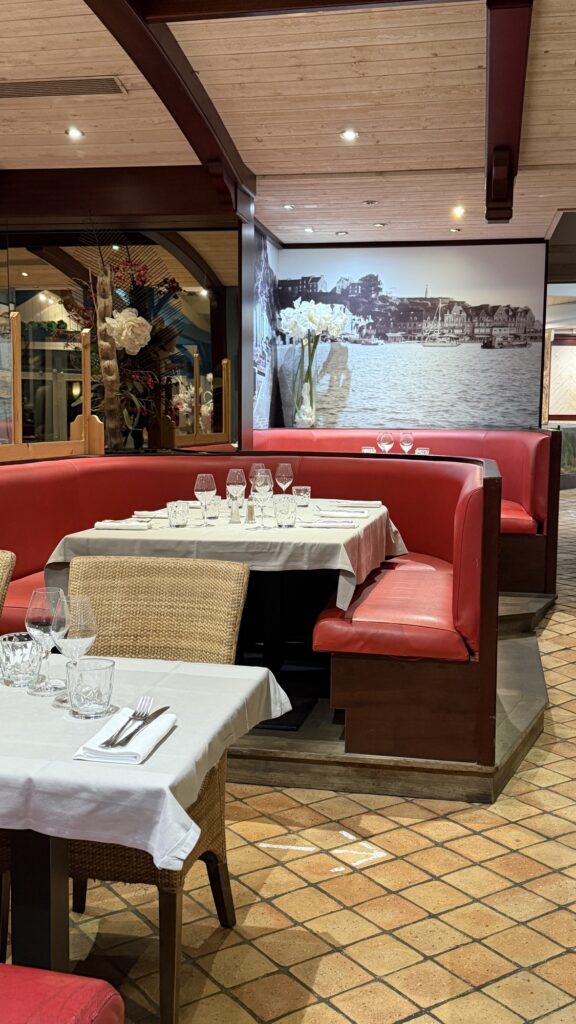
For our first dinner in Cancale, we chose La Mère Champlain, directly on the harbour of La Houle.
The location is part of the experience: the restaurant faces the bay and the view changes with the tides. The menu is strongly connected to the sea, with fish and seafood at its heart.
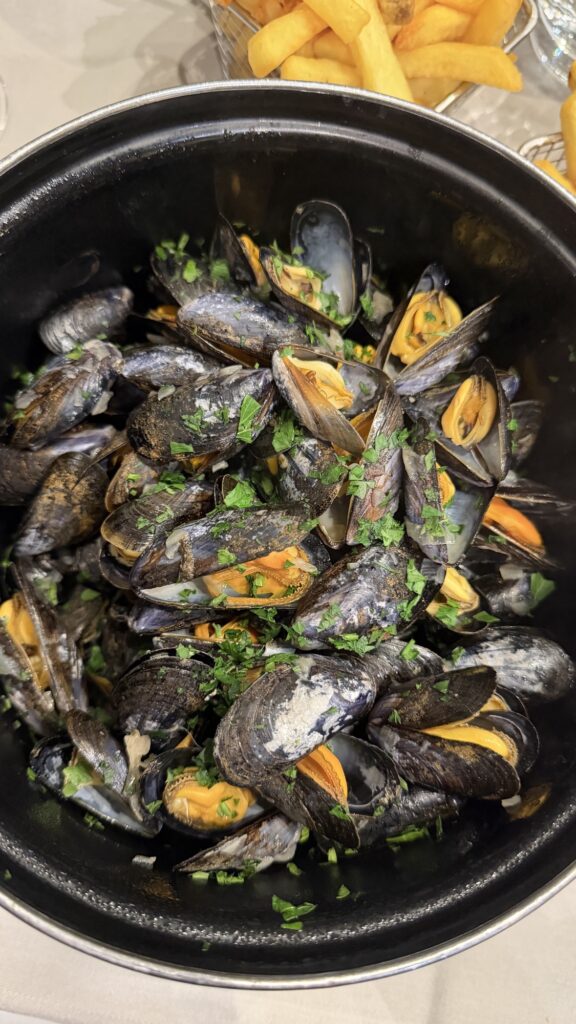
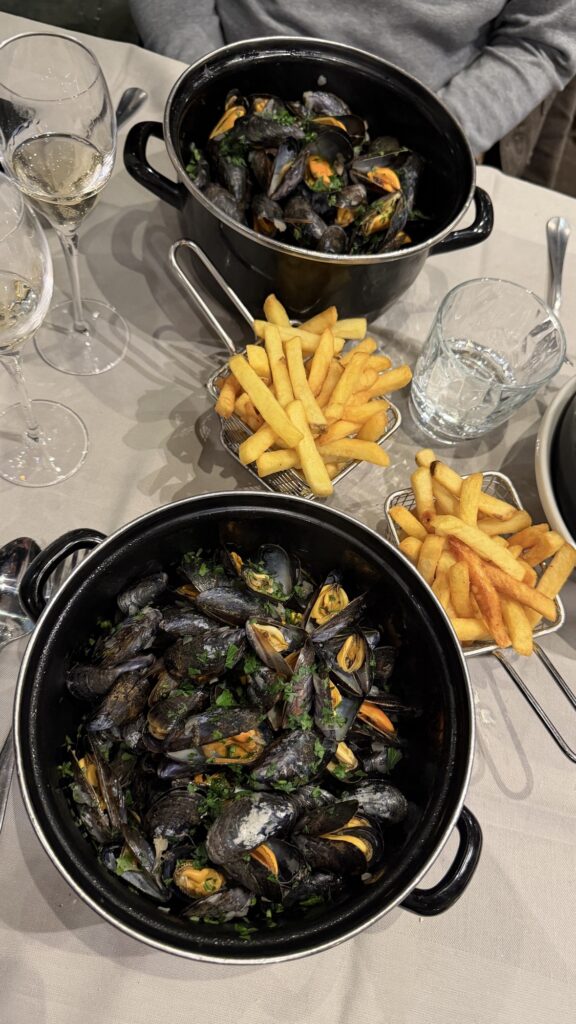
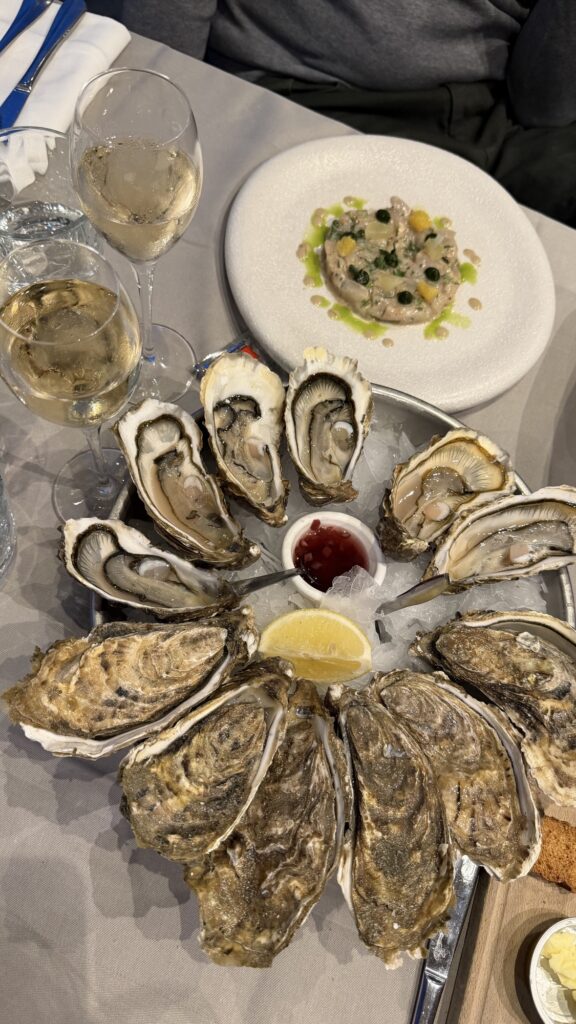
During our dinner, we ordered fish ceviche, moules marinières and oysters.
It was a dinner that perfectly represents the cuisine of this part of Brittany: recognisable ingredients, straightforward preparations and the sea always at the centre.
.
Moules de bouchot: a speciality worth trying
If you love mussels, in this area you should look for moules de bouchot.
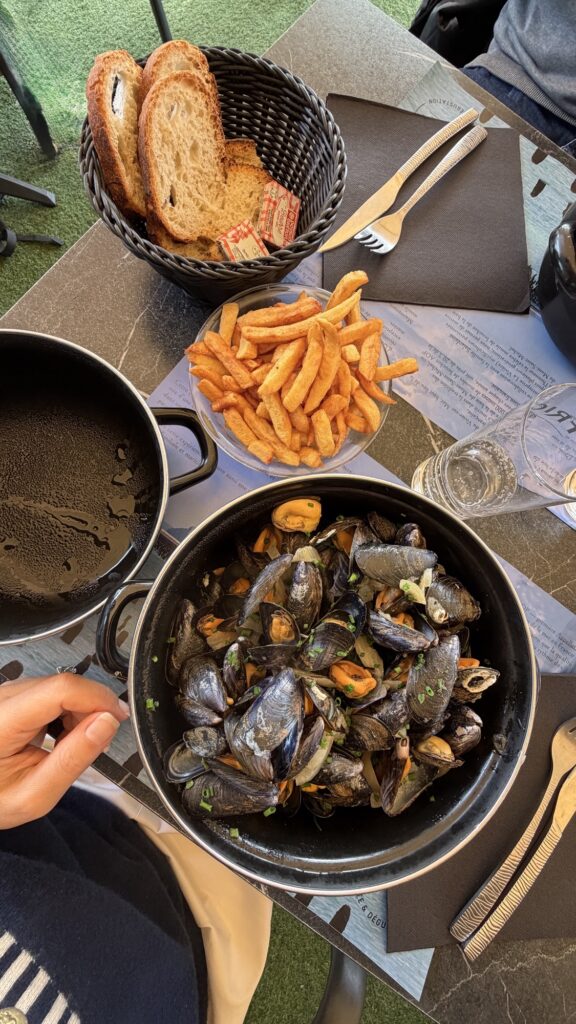
The name comes from the traditional farming method, in which mussels are cultivated on wooden poles known as bouchots. The mussels from the Bay of Mont-Saint-Michel benefit from an AOP designation and are one of the area’s most important gastronomic specialities.
We ate them several times during the trip, including the classic moules marinières.
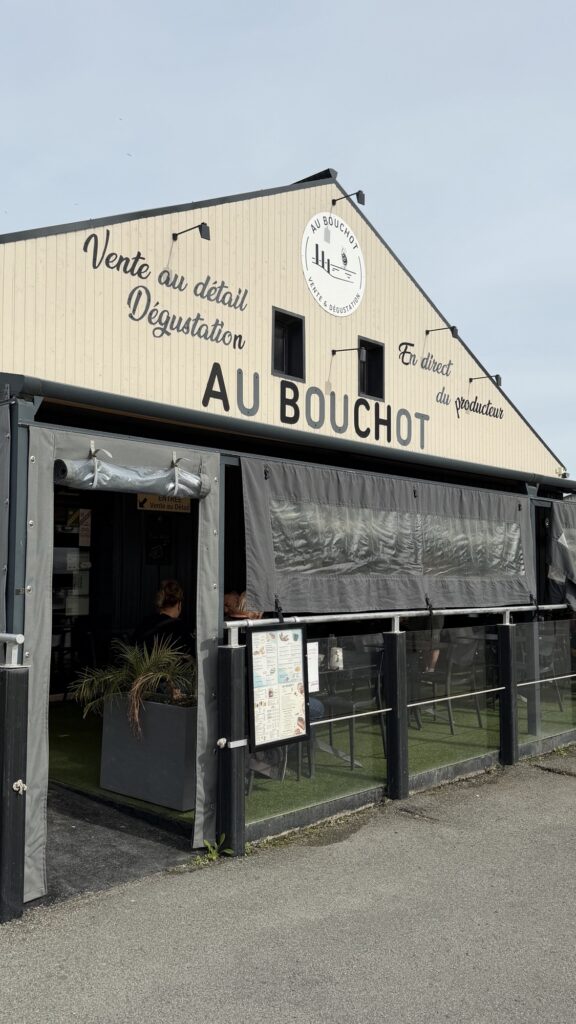
In Dol-de-Bretagne, we had lunch at Au Bouchot, choosing exactly that: mussels. It is a cuisine that does not need many embellishments: mussels, wine, aromatics and the flavour of the product itself. And in Brittany, this simplicity works particularly well.
.
Dinard: the sea in a bistro-style setting
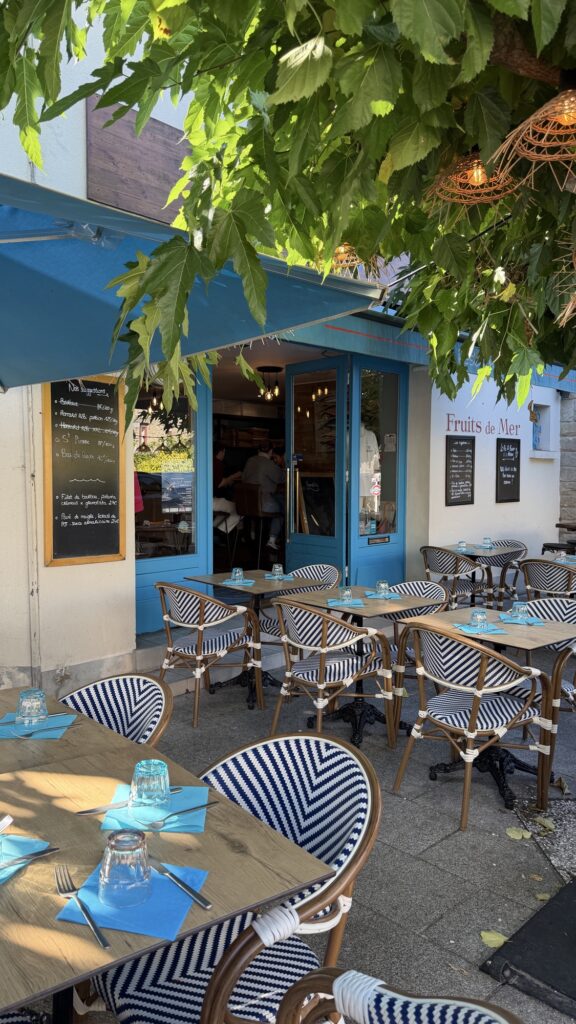
In Dinard, we chose Le Pic à Bulot, an address I would particularly recommend to anyone who loves fish and seafood.
The restaurant combines a seafood shop and a marine bistro, working with fish, shellfish and crustaceans, with a menu that can also change according to the day’s catch.
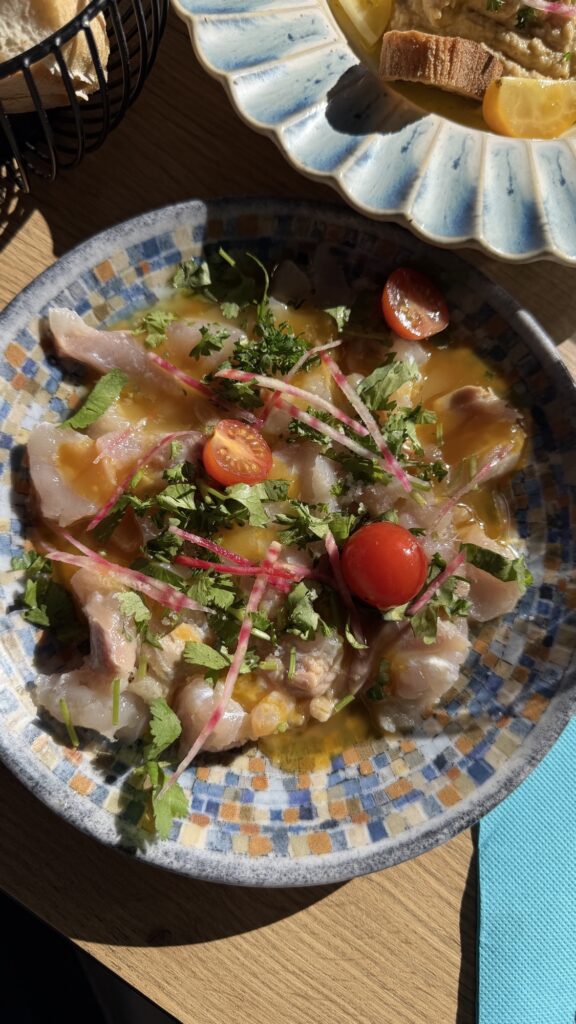
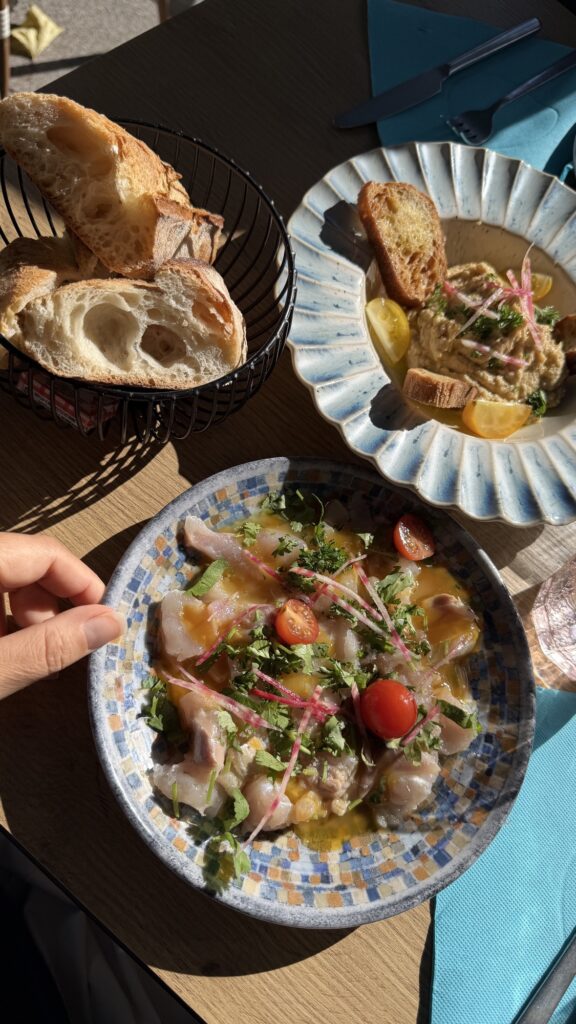
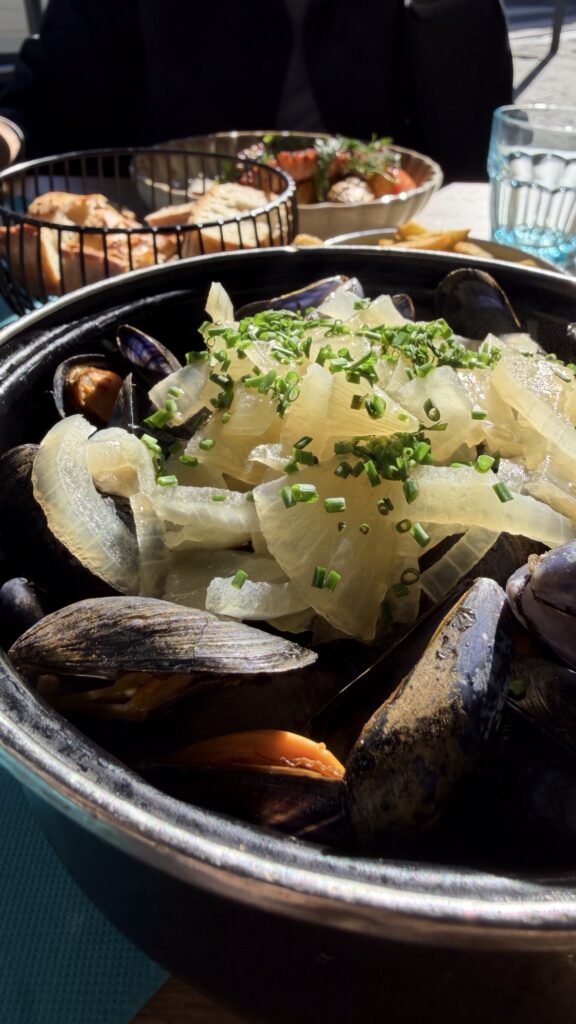
We ordered white fish ceviche, moules marinières with fries and snacké octopus. I liked it because it offered a different experience from the more traditional dinner in Cancale: the sea remained the protagonist, but the dishes were presented in a more contemporary way.
.
The last dinner in Cancale
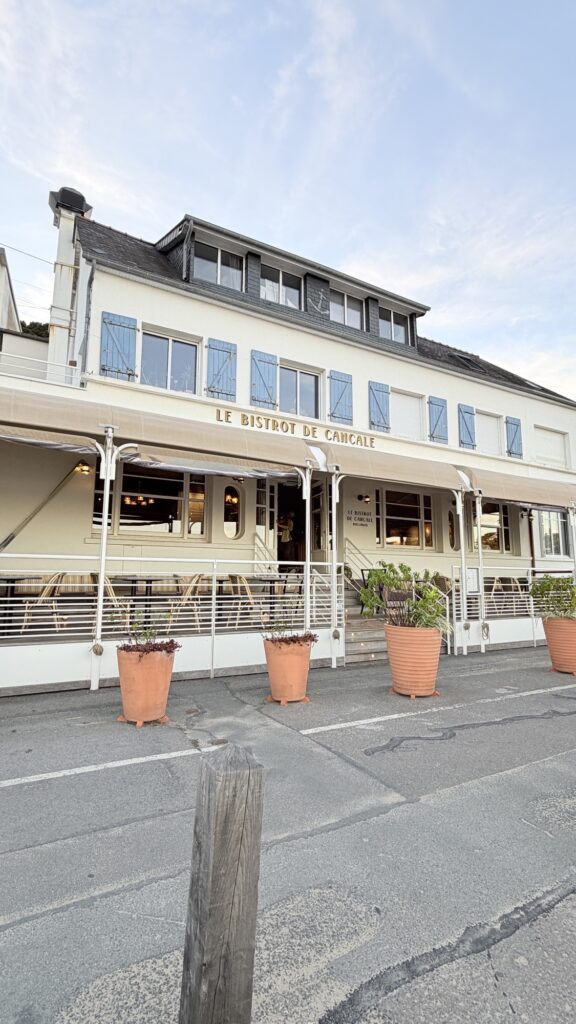
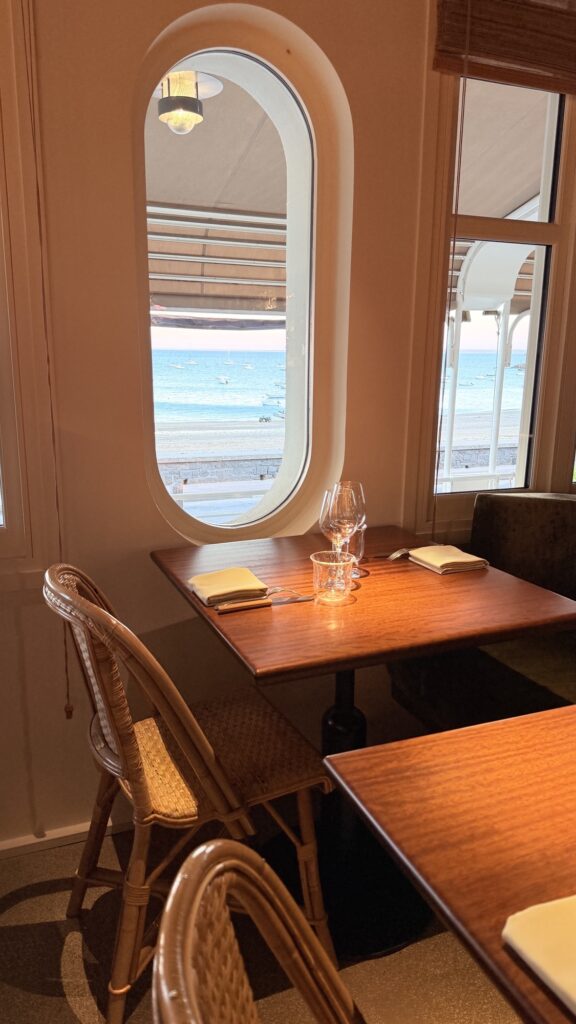
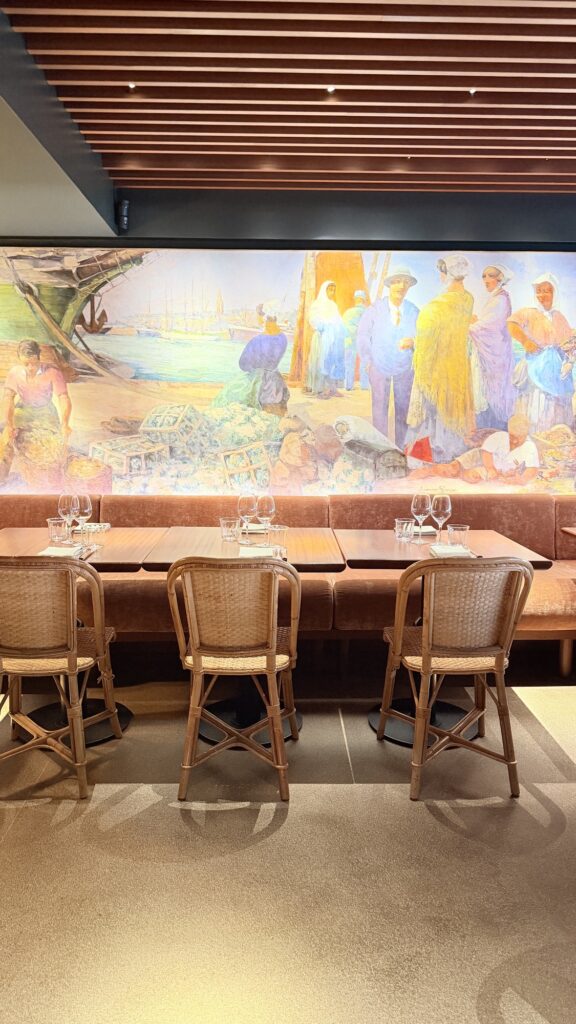
For the final dinner of the trip, we returned to Cancale and chose Bistrot de Cancale. Once again, we followed the gastronomic thread of the journey: the sea.
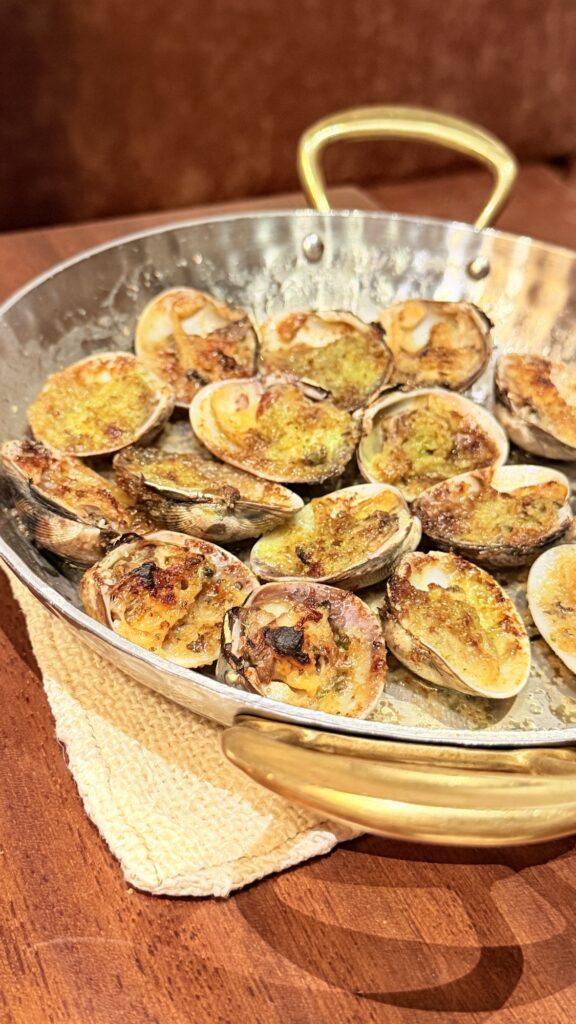
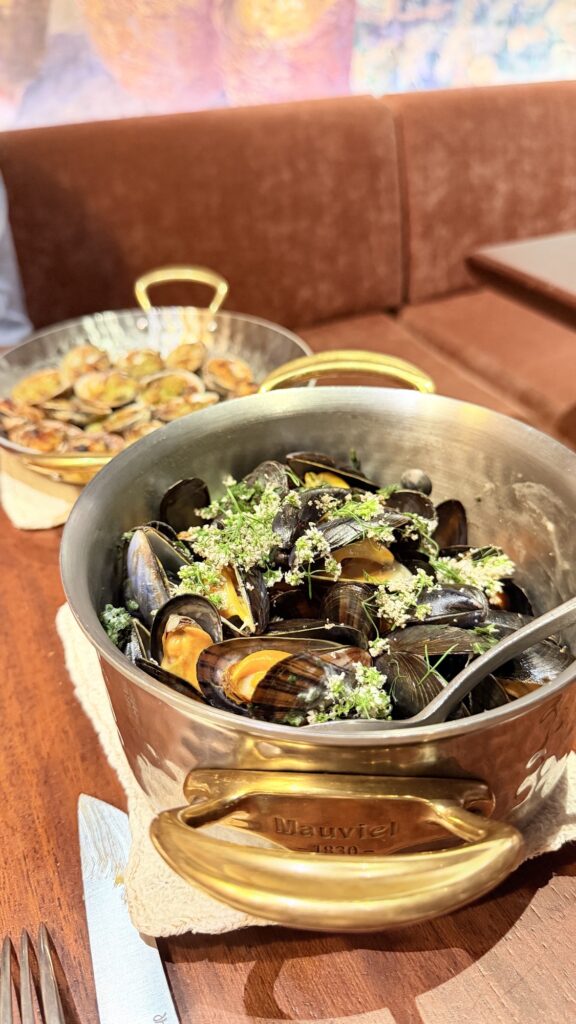
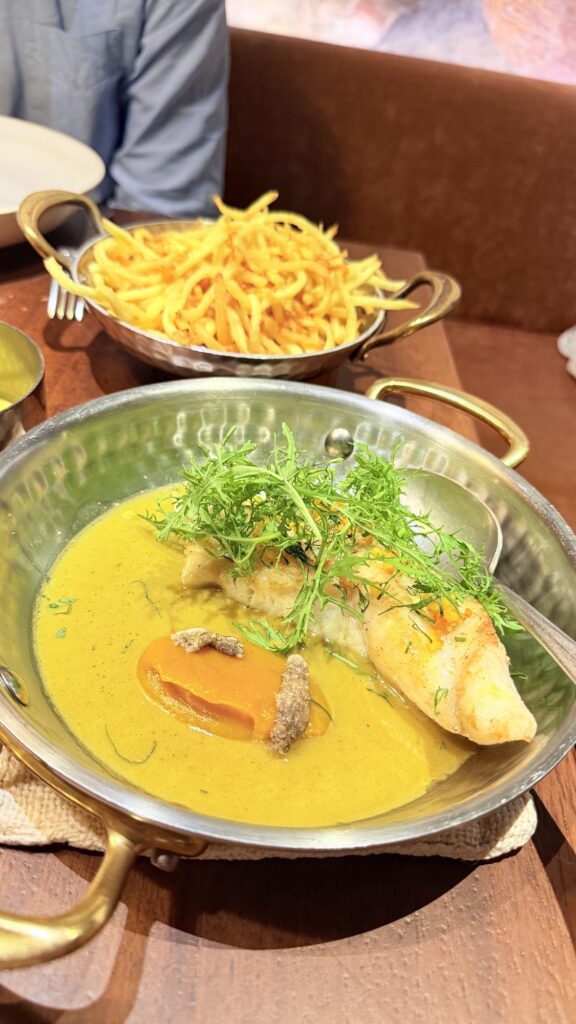
We ordered mussels, clams from the bay, crab bisque with Breton saffron and John Dory.
It was an almost perfect conclusion because, after three days, we found ourselves once again in front of what I consider the true protagonist of the cuisine in this part of France: the local product.
.
What to eat in Brittany: the list not to forget
If you are planning a trip to Brittany, here is my essential list.
Cancale oysters
Probably the first thing to put on your itinerary, especially if you are visiting Cancale.
The market on the harbour allows you to buy them directly and eat them on the spot. Oyster farming is a fundamental part of the local gastronomic identity and is recognised as part of France’s Intangible Cultural Heritage.
Moules de bouchot
Mussels cultivated on bouchots are another speciality of the area. Those from the Bay of Mont-Saint-Michel have had AOP status since 2011.
Galette de sarrasin
The savoury galette made with buckwheat is one of the symbols of Breton cuisine.
Try it with a glass of cider, of course.
Crêpes
The sweet version of the galette, generally made with wheat flour, is another major feature of Breton cuisine.
And this is where salted butter, sugar and caramel come into play.
Kouign-amann
A distinctly Breton pastry made with dough, butter and caramelised sugar.
It is not light. But I don’t think that is why you come to Brittany.
Far breton
Another great regional classic, traditionally made with prunes.
Salted butter caramel
Perfect with crêpes and desserts, but also worth taking home as a gastronomic souvenir.
Breton cider
Especially good with galettes. In Brittany, cider is not simply a drink, but an integral part of the local food culture. The new Bar à Cidres Breizh Café in Saint-Malo is an interesting example of how cider is increasingly treated as a genuine gastronomic product.
Where to eat in Brittany: my addresses
If I were to recreate our gastronomic itinerary, this would be my selection.
Saint-Malo
Bar à Cidres / Breizh Café — for galettes, seafood and cider.
Cancale
La Mère Champlain — for a seafood dinner overlooking the bay.
Cancale
Oyster Market — not a restaurant, but an experience I would absolutely include in the itinerary.
Dol-de-Bretagne
Au Bouchot — for moules marinières.
Dinard
Le Pic à Bulot — for fish, shellfish and crustaceans in a relaxed and contemporary setting.
Cancale
Bistrot de Cancale — for a cuisine centred around seafood and to end the trip without leaving the harbour.
Other addresses to keep in mind
If you have more time and want to explore Brittany’s gastronomic scene further, there are naturally many other options in the area.
In Cancale, for example, I would add La Table Breizh Café to the list for a more contemporary approach, built around the meeting point between Breton ingredients and Japanese influences.
And if oysters are a particular passion, don’t limit yourself to restaurants: it is worth looking for an experience directly with an ostréiculteur, an oyster farmer, to understand how oysters are cultivated and how the work changes according to the tides.
My Brittany is meant to be tasted
After this trip, if someone asked me what to eat in Brittany, I would not start with a list of dishes.
I would start with a feeling.
The feeling of sitting by the sea and ordering oysters. Of eating a galette with a glass of cider. Of watching a large pot of mussels arrive at the table. Of choosing the fish of the day without needing to overcomplicate the dish.
That is how Breton cuisine felt to me: generous, straightforward and deeply rooted in its territory.
And above all, it is a cuisine that never seems to separate what you see from what you eat. Here, the sea is right in front of your eyes and, a few minutes later, it is on your plate.
Scrivi