
Motor Valley is a destination where a passion for cars goes hand in hand with a rich cultural and gastronomic heritage. While Maranello is world-famous for Ferrari, the surrounding area offers much more than automotive history. Around Modena, visitors can discover historic villages, traditional balsamic vinegar producers, wineries and restaurants that celebrate some of Emilia-Romagna’s finest food traditions.
For our weekend getaway, we chose Maranello Resort – Borgo Torre della Montina, in Torre Maina, a fascinating property with a history of its own. From here, we planned a three-day itinerary combining culture, motoring heritage and local food experiences, with the pleasure of returning each evening to a place where history, hospitality and relaxation come together.
Maranello Resort – Borgo Torre della Montina: A Stay Steeped in History
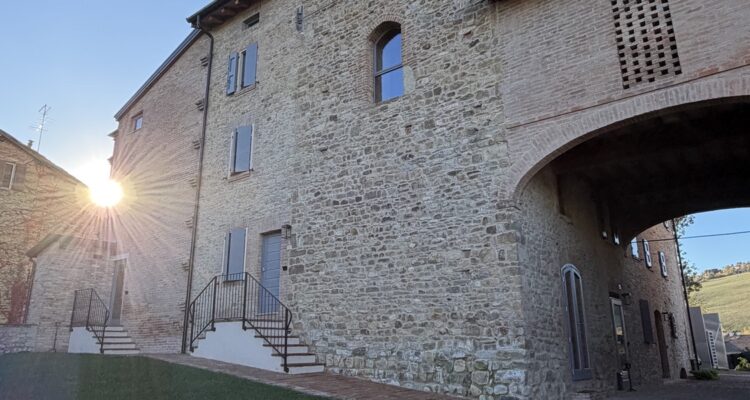
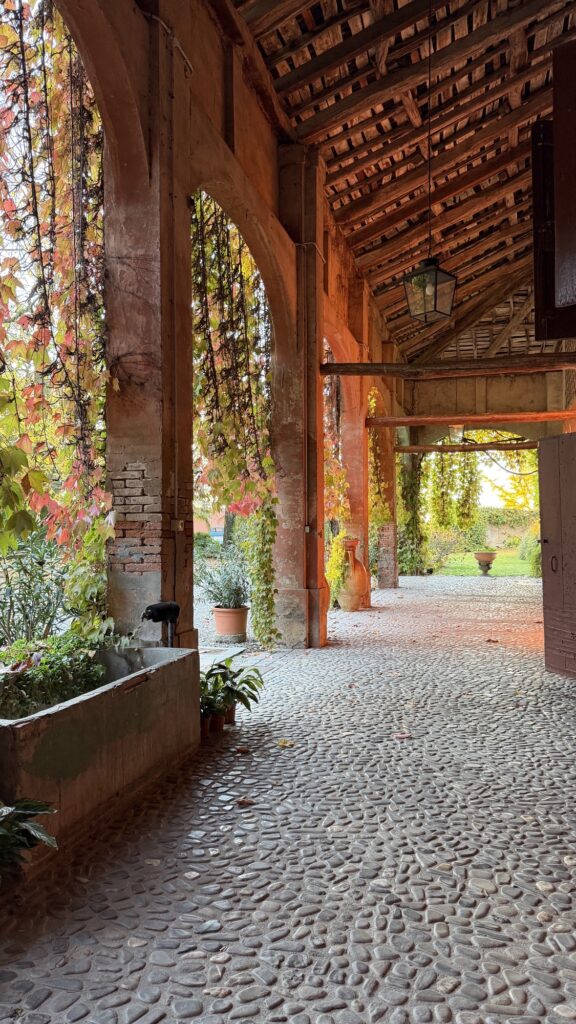
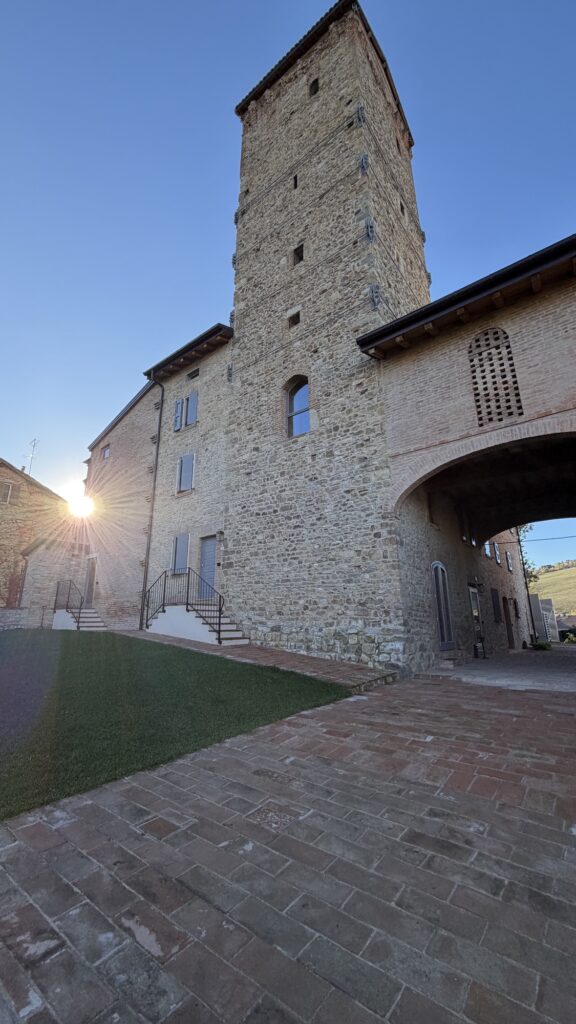
Our weekend begins at Maranello Resort, set among the rolling hills of Torre Maina, just a short drive from Maranello. What makes this property particularly special is its setting: an ancient fortified village whose earliest documented records date back to 996, when the Tower of Pietrobono della Montina was first mentioned.
The historic settlement still preserves architectural features that tell the story of its past, including thick stone walls and sections of the original battlements. After a period of abandonment, the village underwent an extensive restoration project, carefully preserving its historical character while transforming it into a contemporary hospitality destination.
We stayed in the oldest part of the village, and I particularly appreciated the balance between its original architecture and modern comforts. The interior design also reflects the area’s identity, drawing inspiration from the Art Deco style of the 1930s, a period closely connected to Maranello’s automotive history.
The connection with motorsport is part of the village’s own story. In 1937, Francesco Severi, a descendant of one of the families who lived here, won the famous Targa Florio race. A replica of the trophy is now displayed at the resort, highlighting a connection with the world of racing that predates even the Ferrari legend.
The property has the character of a small, scattered hotel, where contemporary spaces coexist with the historic buildings of the village. Everything is very well maintained and clean, the staff are professional and courteous, and the service is attentive. The private parking area is another practical detail that makes the stay particularly convenient.
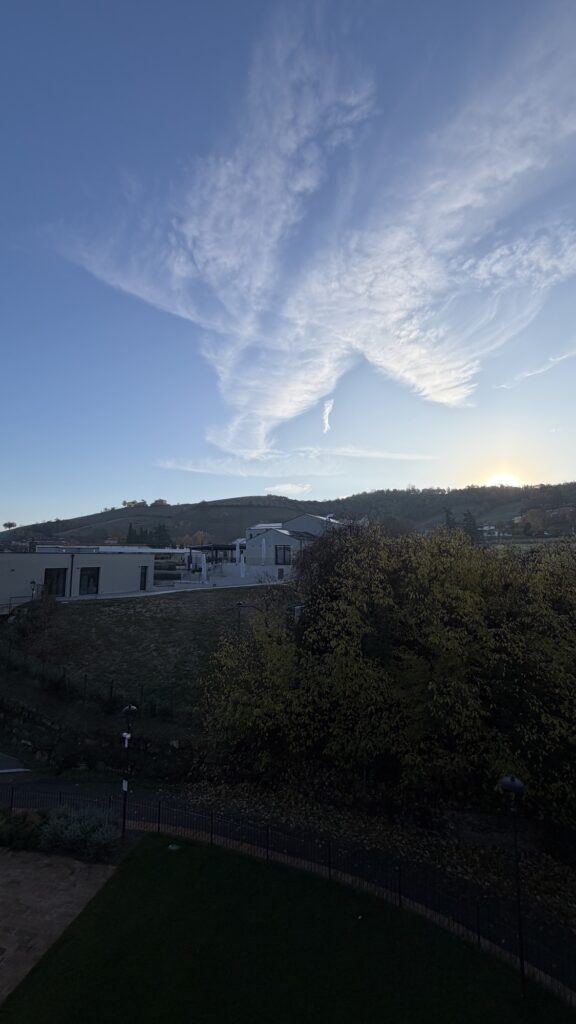
Its location is one of its greatest assets: Maranello, Castelvetro and several of the area’s most interesting food and wine destinations are all within easy reach. At the same time, the peaceful surroundings make it an ideal place to slow down and enjoy a weekend away.


Friday: Arrival and Dinner at Rosso Come
After checking in, there is no need to travel far for the first evening. Rosso Come, the resort’s restaurant, is located within the property and became our dining destination for both evenings of our stay.
Its culinary identity revolves around dry-aged meat and a menu that draws inspiration from Emilian traditions while embracing a contemporary approach. The selection of cuts and the ageing process are central to the restaurant’s offering.
Our first dinner focused on meat. We started with Culaccia di Zibello ham served with fried gnocco, a classic combination from Emilia’s culinary tradition, followed by a cut of Angus beef aged for 71 days. We paired the meal with Stupore wine.
It was our first introduction to Rosso Come’s culinary approach, which we explored further the following evening with a completely different menu.


Saturday Morning: Discovering Acetaia Museo Boni
Saturday morning is dedicated to one of the most iconic products of the Modena area: Traditional Balsamic Vinegar of Modena.
Our first stop is Acetaia Museo Boni, in Solignano di Castelvetro, surrounded by vineyards and orchards. The story of the estate is closely linked to the Boni family and its balsamic vinegar production. The family’s tradition dates back to the early twentieth century, when Arturo Boni was already looking after the small wooden barrels in his own vinegar cellar in Castelvetro.
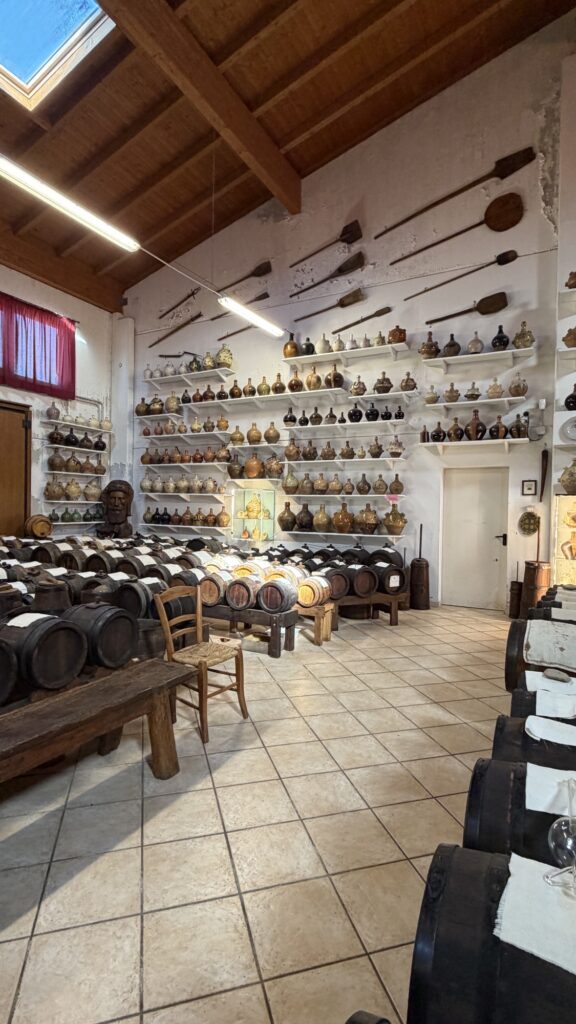
The guided tour offers an opportunity to discover the history of this remarkable product, learn about the production rooms and understand the different stages of the process. It is an interesting experience even for those who are already familiar with balsamic vinegar, as it reveals the cultural value of a tradition deeply rooted in the local area.
One of the most fascinating aspects is the ageing process. Traditional Balsamic Vinegar of Modena PDO is made from cooked grape must and must be aged for at least twelve years. Its long maturation in a series of barrels made from different types of wood gradually develops its distinctive aromas, texture and complexity.
The visit concludes with a tasting that highlights the differences between ageing periods. We sampled a 12-year-old vinegar directly from a spoon and a 30-year-old variety served with vanilla ice cream: two different ways to appreciate the nuances of a product that is an essential part of Modena’s gastronomic identity.


Saturday Lunch: A Balsamic Vinegar Menu at La Cicala
After discovering the history and production of balsamic vinegar, our journey continues at the table. For lunch, we chose La Cicala, in Torre Maina, where we experienced a menu entirely dedicated to this iconic ingredient.
What makes the experience particularly interesting is the way the vinegar is served: it is brought directly to the table and left there for guests to use freely, adding as much as they like to each course. Rather than being simply incorporated into the dishes by the kitchen, it becomes part of the dining experience, allowing everyone to experiment with their own combinations.
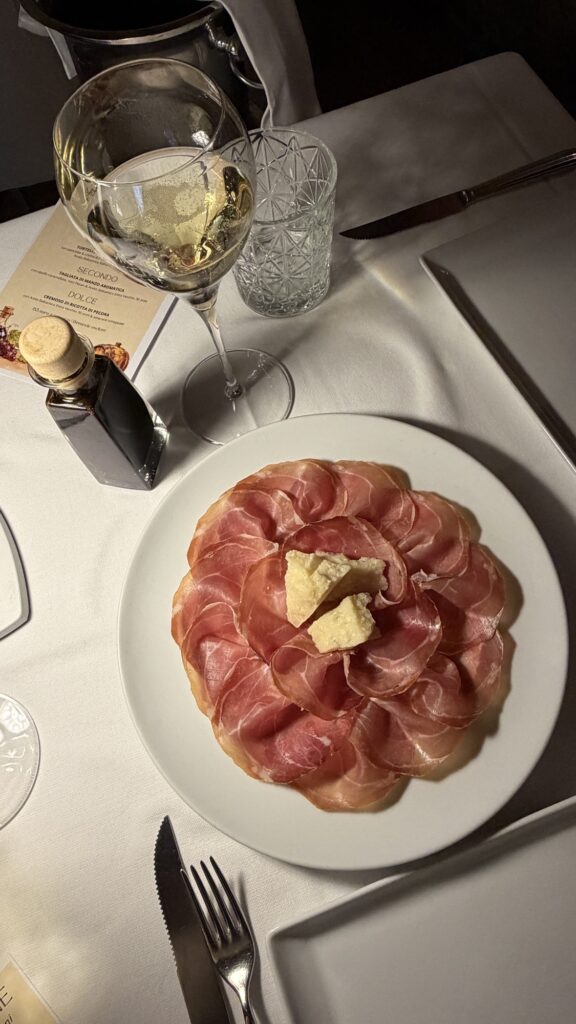
Our lunch began with Culaccia ham and Parmesan shavings, followed by Tortelloni Vecchia Modena, filled pasta served with pancetta and a Parmigiano Reggiano cream. For the main course, we chose aromatic beef tagliata, accompanied by caramelised onion and pecan nuts.
Dessert was a creamy sheep’s milk ricotta with sour cherries in syrup. Throughout the meal, we also had the opportunity to use a 30-year-old Extra Old Balsamic Vinegar, experimenting with different pairings according to our taste.
There is a lovely final touch at the end of lunch: guests receive a small bottle of balsamic vinegar elixir to take home, a thoughtful souvenir of the experience.


Saturday Afternoon: Lambrusco Tradition at Cantina Chiarli
In the afternoon, we head to Castelvetro di Modena to visit Tenuta Cialdini, home to Cleto Chiarli winery and one of the historic names associated with the development of Lambrusco.
The Chiarli family’s winemaking story began in 1860, when Cleto Chiarli started his business in Modena. Since then, several generations have carried the tradition forward, accompanying the evolution of Emilian wine and helping Lambrusco gain recognition well beyond its home region.
Tenuta Cialdini, surrounded by vineyards and a historic park, was acquired by the family towards the end of the nineteenth century. Today, it is home to a winery dedicated to Cleto Chiarli’s premium wines, produced using grapes from the estate’s own vineyards.
The visit unfolds in several stages. It begins with the Galleria Chiarli, an exhibition space that tells more than 165 years of family history through photographs, historic bottles, objects, archival documents and memorabilia connected with the local wine culture. It is a fascinating introduction to understanding just how deeply Lambrusco is woven into the economic and cultural history of the area.
The tour then continues through the winery, offering a closer look at the production process and the different styles of Lambrusco. The final tasting is an opportunity to discover the variety of this wine, which is often associated with a single style but actually offers a wide range of aromas, flavours and characteristics.
During our visit, we tasted four wines: Vecchia Modena, Lambrusco del Fondatore Metodo del Fondatore, Vigneto Cialdini and Pruno Nero Dry. Four different expressions that tell the story of a wine closely connected to its territory.
This is an experience worth considering not only for wine enthusiasts, but also for anyone interested in discovering the relationship between a product and the place where it is made.


Saturday Evening: A Truffle Dinner at Rosso Come
After our afternoon at the winery, we return to Maranello Resort for our second dinner at Rosso Come. This time, the star of the menu is truffle, featured in a series of dishes that combine it with meat and other ingredients.
The menu begins with aged beef nigiri with black uncinatum truffle and Golden Onion with black uncinatum truffle. The next course is tagliolini with butter and fine white truffle, followed by Rosso Come fillet with black uncinatum truffle and egg with pumpkin and black uncinatum truffle.
A second evening that offers a different perspective on the restaurant’s culinary identity, following Friday’s dinner dedicated to aged meat.


Sunday Morning: Discovering the Ferrari Legend
Sunday morning is dedicated to the reason why Maranello is known all over the world: Ferrari.
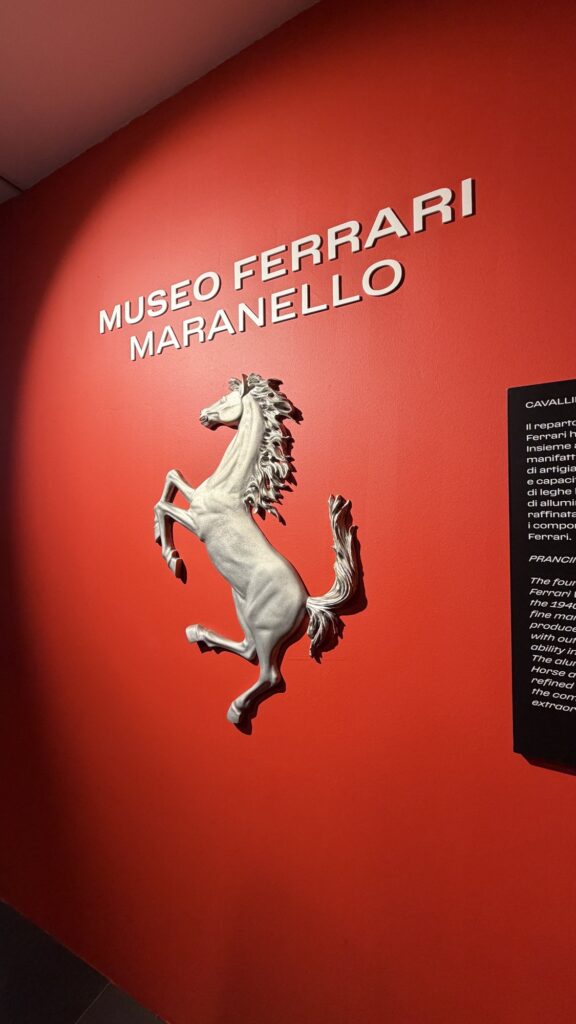
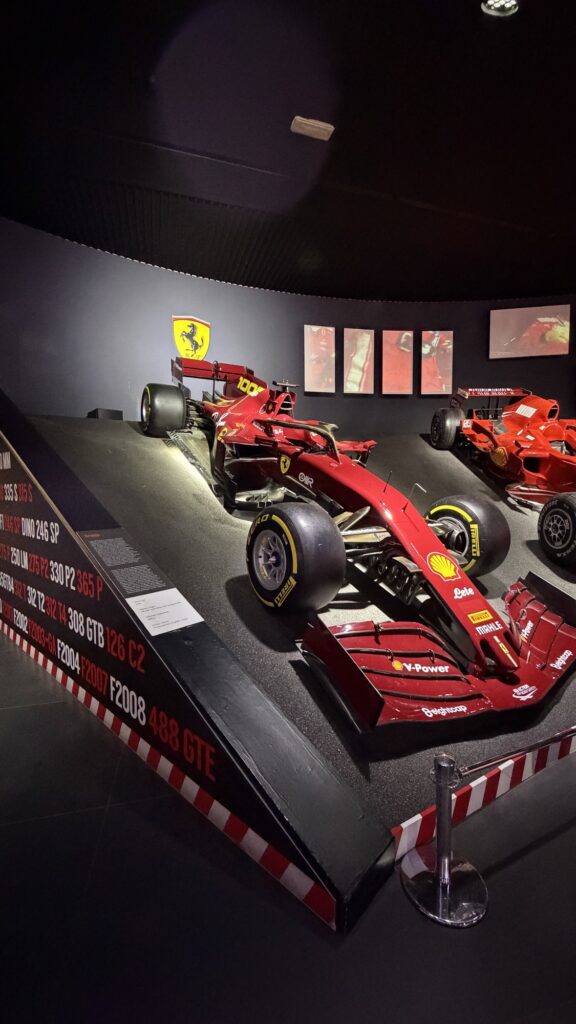
The Ferrari Museum in Maranello, located on Via Alfredo Dino Ferrari, is an essential stop for anyone visiting Motor Valley. Its exhibition takes visitors through the history of the Prancing Horse, with cars, trophies, photographs and memorabilia documenting the competitions and achievements that helped build the Ferrari legend.
The exhibition explores different aspects of the brand, from Formula 1 single-seaters to racing cars and iconic road models. It also offers an opportunity to learn more about Enzo Ferrari and the origins of the company through historical documents and displays.
The museum also hosts temporary exhibitions and installations, as well as driving simulators and interactive experiences.
My advice is to book tickets online in advance and, if possible, plan your visit for opening time. This makes it easier to explore the exhibition at a comfortable pace and enjoy the different rooms without rushing.

Sunday: Brunch at Rosso Come Before Heading Home
Before leaving the resort, we enjoy one final gastronomic experience: Sunday brunch at Rosso Come.
The menu combines international influences with sweet and savoury breakfast classics, offering different options inspired by some of the world’s best-known brunch traditions.
We tried the Original New York selection, including an avocado toast made with homemade sandwich bread, Nordic salmon, avocado, tomatoes and yoghurt sauce, together with a sweet pancake served with hazelnut spread.
From the Royal English Breakfast selection, we chose the classic omelette and the version filled with ricotta and Parma ham, as well as the French Toast Fruit, made with cinnamon brioche, butter, berry sauce, fresh berries and dried fruit.
A relaxed and enjoyable way to end the weekend before setting off home.


A Weekend in Motor Valley, with Maranello Resort as Your Base
Three days are enough to discover some of the most interesting sides of the Modena area, especially when you choose a place that makes it easy to reach the region’s different attractions.
Maranello Resort – Borgo Torre della Montina was the common thread running through our weekend: a fascinating property with a remarkable history, a strategic location and an atmosphere that encourages guests to slow down and enjoy their surroundings.
Our visits to Acetaia Museo Boni, Cantina Chiarli and the Ferrari Museum completed the itinerary, bringing together culture, tastings and local discoveries.
It is an itinerary I would recommend to anyone looking for a weekend getaway that goes beyond the usual, combining a passion for cars with the food and wine heritage of Emilia. Because Motor Valley is not just a destination to visit: it is a place to taste, discover and experience at your own pace.


Scrivi